
Editor’s note: This story was originally published on Feb. 28. It was updated on Mar. 3 to include the perspective of SWOP Behind Bars.
Sex workers are abandoning their Amazon wishlists after the company began sending notices Wednesday that customer addresses may soon be exposed to buyers. As first covered by 404 Media, a change in Amazon policy means customers who use the site’s public wishlists may have their addresses exposed to customers via third-party sellers.
Currently, when Amazon users make a public wishlist, they can prevent gifters from purchasing list items through third-party sellers, but according to Amazon’s email to customers, on March 25th, they’ll no longer have a choice. These sellers, unlike Amazon, may opt to share users’ addresses with gift buyers for reasons like package tracking. For many sex workers, who’ve long used Amazon’s wishlist to engage with fans, that means they have to leave the platform.
“When major platforms change privacy protections without considering criminalization and stigma, they aren’t just changing a feature — They’re removing a safety tool,” explained Alex Andrews, executive program director for SWOP Behind Bars (SBB), a grassroots advocacy network for incarcerated sex workers.
A longtime Onlyfans content creator, who goes by the name Ghostie online, previously got several gifts a month from their Amazon wishlist, supplementing their income. Now, they’ve locked down their address on the site and plan to take down their wishlist by the time the change is implemented. “I can’t risk that because that’s me getting doxxed,” they said. They’re not the only one dealing with this new dilemma.
“Amazon Wishlists have long functioned as a harm-reduction tool within sex worker communities and mutual aid networks,” said Andrews. She noted SBB itself has used Amazon wishlists to “help meet immediate needs like hygiene products, clothing, food, books, and reentry essentials,” but this change introduces new safety risks.
As sex work has transformed into an online industry, doxxing and the subsequent risks for stalking, harassment, and other violence have become a significant threat to workers. A 2025 survey of online sex workers reported that 34% of its respondents had been doxxed. It’s a pervasive enough problem that sex work advocacy groups have created resource guides to preventing and dealing with the fallout of doxxing, and one research paper found, within the camming community, doxxing was routinely treated as an “expected” hazard.
Some sex workers are being vocal online about leaving Amazon and moving to other wishlist platforms like Throne, but it’s not an easy choice.
Ghostie said that even though they have wishlists on other sites and try to incentivize their fans to use them, they haven’t been successful. “A lot of my fans are low income, so it’s easier to get them to shop on Amazon,” they explained. “So I was pretty upset.”
According to Andrews, other, more privacy-focused sites lack Amazon’s accessibility and product variety, so even if there are technically other options, this move from Amazon still strikes a serious blow. The Backbone reached out to Amazon to ask about the impact of this change on sex workers, and Amazon did not provide a comment on the record.
“These decisions are rarely framed as anti–sex worker policies, but they consistently produce that outcome because sex workers are not consulted during policy development.”
This isn’t the first time sex workers and their content have been suddenly de-platformed online by corporations. In 2021, OnlyFans briefly banned sexual content, despite sex work’s role in building its platform in the first place. More recently, pressure from credit card companies including Visa and Mastercard, as well as credit-card processor Stripe, led to crackdowns on sexual content for gaming sites itch.io and Steam. Even ManyVids, a platform founded by a sex worker, seems to have fallen prey to anti-sex work rhetoric and has become increasingly hostile to its user base of sex workers.
“Over the past several years … Sex workers have repeatedly experienced sudden shifts that destabilize income and safety overnight,” said Andrews. “These decisions are rarely framed as anti–sex worker policies, but they consistently produce that outcome because sex workers are not consulted during policy development.”
Andrews went on to say that although these policies may not be framed as targeting sex workers, sex workers often become “collateral damage” when companies pursue “mainstream legitimacy or investor reassurance.”
This censorship, first applied to sex workers, often leaks out into other areas of the internet, but according to Ghostie, people outside of the SW industry often don’t care about the rights of sex workers “until it affects them.”
“Because what happens to us,” they continued, “… eventually affects them. Say that we lose our platforms; they lose their access to entertainment.”
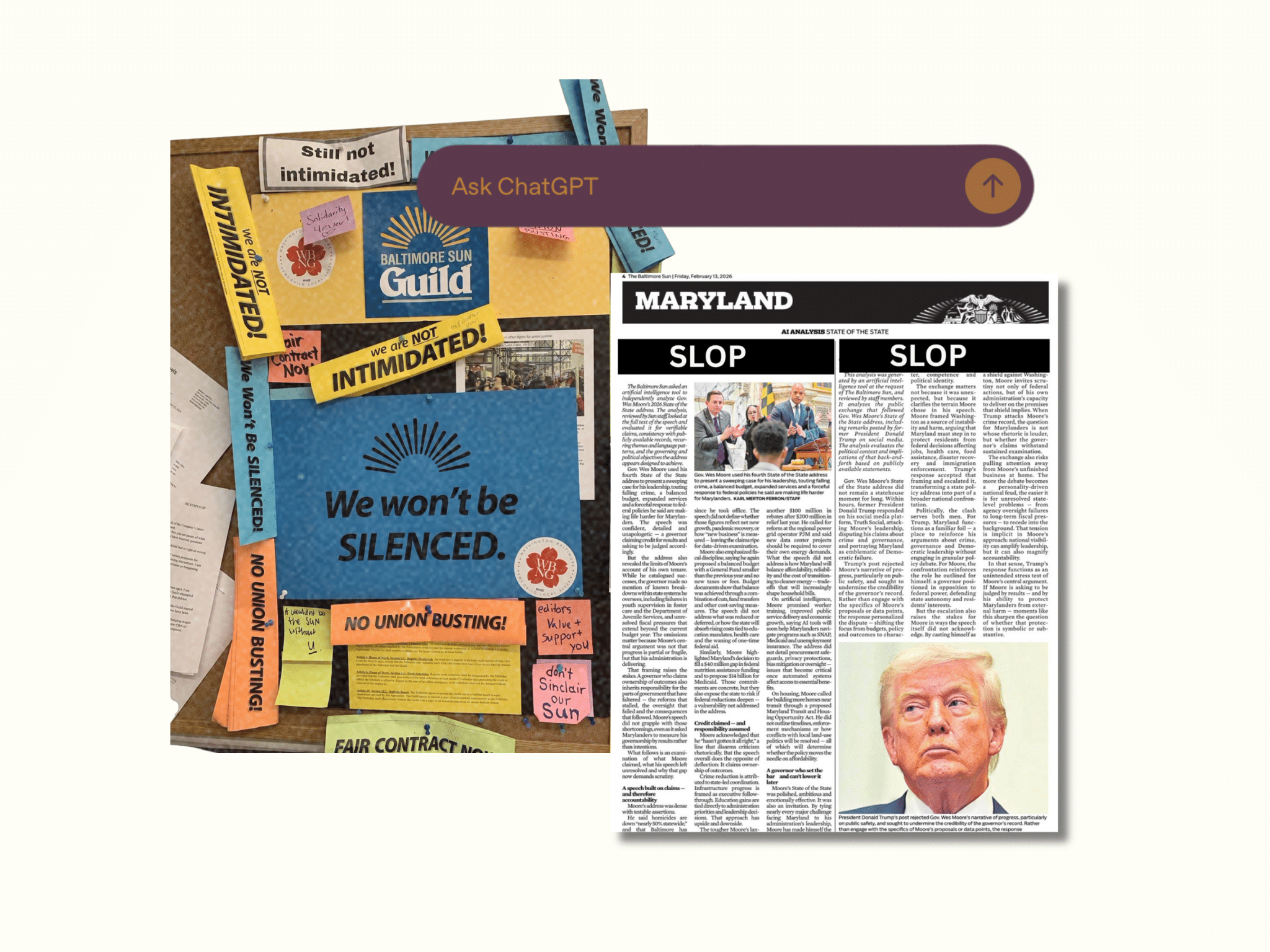
In other news: Earlier this week, I did reporting for The Objective, covering The Baltimore Sun’s recent AI usage and its ongoing union struggle. You should check it out.
Do you have a story that needs telling? To send a tip, you can email [email protected], or reach out on Signal (@marsbars.81). Both email and Signal offer end-to-end encryption. Don’t use a work device.
I promise to treat your stories with the rigorous care and attention to detail they deserve.
Did you enjoy this story? Subscribe for free to get more stories like this, right in your inbox, or share this one with a friend. The Backbone is a one-person project, so the little things make a world of difference.